Imogen Hill Art
Unit 3: Critical Reflection
I still consider myself to be a dry stone wall. Since the last unit I have not changed in that respect, but I have become more frustrated by where I am situated in life. My relationship with my grandfather has always been an odd one, but since becoming a carer for him it has only become a more difficult and treacherous path to follow. Although I feel good about helping him, I fear I have become too altruistic in the sense that my own well-being is neglected. According to, Eva Ritvo, a Doctor of Medicine, ‘helping others triggers a release of Oxytocin, which has the effect of boosting your mood and counteracts the effects of cortisol’ (Ritvo; 2014)… so why does it seem to have the opposite effect on me? I have mostly felt bound to my grandad’s condition since his leg amputation, perhaps I felt that I had to continue just to keep a tight grasp onto what is left on that side of my family after my grandmother’s passing, a coping mechanism that distracted me from the grief of losing a grandparent which has got less effective over time. I have felt a tremendous amount of guilt for my anger towards my grandad which I’ve felt the need to internalise as I haven’t felt comfortable enough to speak to anybody face to face about it.
Walking has continued to be the only means of escape from the noise of the everyday, the city, intrusive thoughts and my caring duties. Nature has been a sole provider of freedom, momentary as it is, these escapes for me for three years and my gratefulness towards it has been subconscious until it began to creep its way into my artworks. In Unit 3 I have discovered just how omnipotent nature, natural forms and wildlife truly are. I spent two days teaching art classes on complementary and harmonious colours for adults with learning disabilities, after the first class it had been arranged for my mother’s gardening class to visit Sydenham Garden, a place that enables those with disabilities and mental health issues to take part in therapeutic sessions ranging from horticulture to arts and crafts. As myself, my mother and the students spent time just walking around the garden (Figure 1), it was suggested that we practice five ways to be closer to nature, interacting with plants and trees by touching their leaves and bark and examining the wide variety of wildlife residing in the pond (figure 2), appreciating it’s beauty, considering it’s personal meaning, pin-pointing emotions and being mindful of its importance by ‘extending the self to include nature… making ethical product choices [or] being concerned with animal welfare’ (Richardson; 2017) for example. I could see that after practicing these steps, the students were experiencing the same wonder that I feel on my walks… even for the students who have more difficulty communicating, it was clear that the nature surrounding was speaking to them in a way that people can’t.

(Left) Figure 1, walking through Sydenham Garden on 13/06/24
(Right) Figure 2, students examining wildlife in Sydenham Garden on 13/06/24
This experience made me feel joy, that nature clearly has such a positive effect on others, and worry, that the climate will continue to deteriorate, leaving nowhere for people who struggle to communicate to connect with nature without feeling judged instead. ‘June 2024 was warmer globally than any previous June in the data record, with an average ERA5 surface air temperature of 16.66 degrees Celsius, 0.67 degrees Celsius above the 1991 – 2020 average for June and 0.14 degrees Celsius above the previous high set in June 2023’ (Climate Change Service; 2024)… As time passes it is becoming clearer that climate change is only worsening, and with unreliable governments and people in power it is being acknowledged but still treated as if it is not a pressing matter, perhaps because each year the temperature only rises by measly numbers that are easy to be ignored, but when they are added together the difference in climate is significantly changing. It became an extra weight placed on my shoulders that I was carrying around, and like I was experiencing a sense of impending doom that could only be cured by making artwork in response to Sydenham Garden, a place that restores my faith that there are people that dedicate their time to looking after nature.
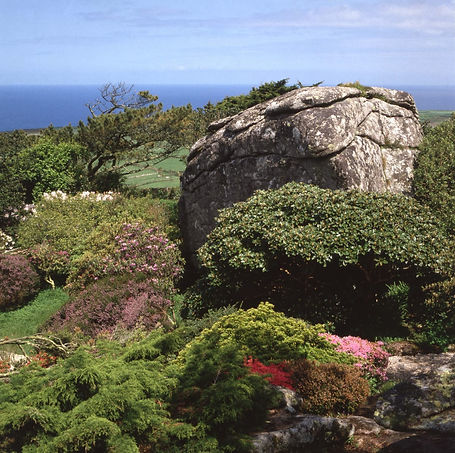
Figure 3, A View of the Garden at Patrick Heron's home, Eagles Nest, in Zennor, St. Ives, 1985, Photography by David Ward (hhh.viewingrooms.com)

Figure 4, Red Garden Painting: June 3-5, 1985, Patrick Heron 210.8cm x 335.3cm, oil paint on canvas (Tate)
I became aware of Patrick Heron’s paintings in 2018 upon visiting Tate St. Ives to see an exhibition of his and I instantly became enamoured of his bold use of colours that clash and complement each other to create ambiguous forms against white walls that further enhance the paintings. Heron’s inspiration for some of his paintings was his garden in Cornwall, ‘although the pictures do not directly represent the garden and landscape of his home… the forms of these surroundings resonate’ (Holland-Hibbert; 2021). In Figure 4, an abstract form of his garden in Cornwall (Figure 3), I imagine the white circle with thin yellow lines within it as being the large boulder that has cracks similar to the red brushstrokes running through it. The painting is split into shapes that mirror his surroundings which I feel creates movement, similar to when I walk through nature, I notice my surroundings become shapes that merge together rather than intricate details. I began to consider colour and shapes at Sydenham garden after reacquainting myself with Heron’s paintings and the work that the students I taught made (Figure 6). Making Cutout I (Figure 5), I imagined the colours and shapes that first came to my mind, such as the green leaves on trees that loomed over me at the entrance of the garden and the intense red of the Red-veined darters that were flying around the wildlife pond.

(Left) Figure 5, Cutout I, 2024, Imogen Hill, 58cm (w) x 26cm (h), mixed media on paper
(Right) Figure 6, Complementary Colour Pattern, 2024, Anne Buckle, 21cm x 29.7cm, oil pastel on paper
Similar to Heron, Helen Frankenthaler was an abstract expressionist who often depicted natural forms with shapes of bold colour. However, in 1952 Frankenthaler developed her own way of applying paint to her canvas which is named the Soak-Stain technique. For her painting Mountain and Sea (Figure 7) she thinned down her oil paints with turpentine before pouring them onto the canvas. Frankenthaler admitted that ‘she made this decision due to a ‘’combination of impatience, laziness, and innovation,’’’ (Babbs; 2024) but it has proved to be an influential as other artists such as Morris Lewis and Sam Gilliam also used this technique. The technique ‘conveys a sense of luminosity and spontaneity’ in her paintings that are ‘based on her landscape’ (Marder;2018), I also think that this technique creates a sense of movement, but perhaps that is because she would work on the floor so that she would have more control over her canvas and paint. I created my own version of this technique by soaking fabric with watercolour on top of paper so that the shape of the fabric would be printed onto the paperto create a similar essence of the movement of natural forms that surrounded me as I walked through Sydenham Garden.

Figure 7, Mountains and Sea, 1952, Helen Frankenthaler, 219.4cm x 297.8cm, oil and charcoal on unsized, unprimed canvas (Pinterest.com)

Figure 8, Study of a Wildlife Garden, 2024, Imogen Hill,112cm (w) x 76cm (h), mixed media on paper
Study of a Wildlife Garden (Figure 8), is a homage to Sydenham Garden that considers the colours and forms of the place in the same way that Heron and Frankenthaler considered it in their work. Heron’s paintings, due to their bold colours, can be static (it is the varying shapes that reflect movement), I used bold complementary colours (red and green) and brown as a centre point for the soak-stained fabric to move around it, a similar fluidity of constant flowing that are caused by Frankenthaler’s expressive movements upon her canvas that mirror the constant, rapid flow of the sea or wind at the top of a mountain, suggesting a unity of the landscape that she experienced in Cape Breton Island, Nova Scotia (the place that inspired figure 7 which, to me, played a vital role in inventing the soak-stain due to the intensity of the scene / elements that bewitched her) and herself, a vital notion in my own practice.
During the degree show crits Gavin Edmonds pointed out the inaccuracy of the roots growing from the Phlomis Russeliana in figure 8, the only detailed form in my painting as I interacted the most with this plant at Sydenham Garden and remember it affecting me in a way that mountains and sea affected Frankenthaler and the colours and shapes of his garden affected Heron. I studied the flower, leaves and stem closely but not the roots. I went to the exhibition named Unearthed: Photography’s Roots in 2021 at Dulwich Picture Gallery which followed the timeline of the development of photography processes and introduced me to the photography of Anna Atkins. Atkins specialised in developing Cyanotypes of British Algae, plants and animals after the invention of this process in 1842 by Sir John Herschel, who ‘intended it for reproducing mathematical tables’ (The Historic New Orleans Collection). The first photographically illustrated books were made by Atkins (Figure 11) which display the intricacy of plant life (Figure 9 and 10), and her ‘combined… passions for scientific inquiry, technological experimentation, and artistic expression’ (MoMA).


(Top Left) Figure 9, Spiraea aruncus (Tyrol), 1851-54, Anna Atkins,Cyanotype photograph (metmuseum.org)
(Top Right) Figure 10, Dictyota dichotoma, in the young state and in fruit, 1853, Anna Atkins, Cyanotype photograph (ernestjournal.co.uk)
(Bottom) Figure 11, Photographs of British Algae: Cyanotype Impressions, Volume 2, 1853, Anna Atkins, bound Cyanotypes
My artwork is also a combination of experimentation by using natural resources to make pigments and clay to unleash my artistic expression through texture and landscape. I decided to make my own impressions of natural forms using the Cyanotype process (Figure 12, 13 and 14).

(Left) Figure 12, Cyanotype test 14, 2024, Imogen Hill, 10.5cm x 10.5cm, Cyanotype photograph
(Middle) Figure 13, Cyanotype test 22, 2024, Imogen Hill, 10.5cm x 10.5cm, Cyanotype photograph
(Right) Figure 14, Cyanotype test 9, 2024, Imogen Hill, 10.5cm x 10.5cm, Cyanotype photograph
I gathered a range of leaves including eucalyptus and holly leaves (Figure 13 and 14) and pulled up some weeds with their roots still attached (Figure 12 and 14) during one of my every day walks instead of making a postcard entry for my diary in the form of a concertina, then tried my hand at developing Cyanotypes for the first time. I mainly centred the roots in my compositions as they were the main reason why I wanted to try this process in the first place, but also became really interested in the drips and patterns caused by the paper being dipped into the solution for too long that surround the outlines of the natural forms. They reminded me of the expressive movement of Frankenthaler’s paint that resemble natural elements, of when rain drips onto my postcard designs and of Marie Craig’s process of developing Cyanotypes (Figure 15 and 16). Craig purposefully leaves her Cyanotypes to dry outside as ‘season, sun, and wind… play… a big part in the process. I love allowing chance and the weather to be a partner in the process’ (Craig; 2017), another way of suggesting unity, but also the power and influence nature has on everything that is exposed to it.

(Left) Figure 15, Marie Craig's Cyanotype process, 2017, (mariecraigart.com)
(Right) Figure 16, Marie Craig's Cyanotype process, 2017 (mariecraigart.com)
IThe International Klein Blueness of Cyanotypes led to me to the writing of Derek Jarman because of the same shade of blue still that lasts for the entire duration of his film, Blue, which deals with his experience of AIDS, a losing battle that led to Jarman’s retreat to Dungeness, where after finding out that he was HIV positive in 1986 he decided to make a garden and record this process in Modern Nature. Jarman, while writing about his garden, also reflects on his childhood, his career and being a young gay man in the 60s. I visited Dungeness last year to see his cottage and was overcome by the natural elements such as the strong gusts of wind that Jarman experienced that ‘d[id] not stop for [his] thoughts,’ (Jarman; 1991; pg.105) suggesting the power of nature over thoughts as intense as slowly dying. Although sometimes feeling intimidated how nature influences our moods constantly, Jarman mostly seemed to find comfort in his isolation as he had the space to reflect on his life, this is evident when he writes, ‘apart from the nagging past... I have never been happier… I look up and see the deep azure sea… in the February sun, and today I saw my first bumble bee’ (Jarman; 1991; pg.57). His way of dealing with grief was by turn[ing] his garden into a processing ground for grief' (Popova), a way in which I also deal with my own struggles, by treating my walks in nature as a distraction, instead of thinking about my grief towards the man that grandad no longer is I focus on a tree or plant, which then allows me time and space for reflection on my feelings that I tend to neglect when not walking, to then combine both a piece of nature and my identity as an artwork that keeps a record of how I felt and who I was at that time.
During the summer I realised just how much influence nature has had by visiting locations of where writers had been influenced by their surroundings. Knole park, former home of author Vita Sackville-West and her husband, and visiting place of Virginia Woolf in 1924. Sackville-West and Woolf were lovers, and Woolf’s affection for her lover was the inspiration for her novel, Orlando. I visited the Oak tree (Figure 17) that inspired the poem that Orlando writes for almost 300 years which ‘represents Orlando’s identity… and his – later, her – growth as a writer and… person throughout the novel’ (Lit Charts). I was told during a tour of the grounds that Woolf would spend a lot of time at this tree, perhaps because she sought comfort in a natural form that she pictured as her lover that also acts as collaborator for her writing just as I seek for nature to influence me. I also visited the Brontë Parsonage Museum in Haworth, the home of the Brontë sisters. Although the sisters were publishing after the Romantic Period had just ended (1798-1837), writing by Charlotte and Emily Brontë include Romantic elements that are linked with nature. I feel I identify the most with Emily as she was a true, late Romantic just as I am, who took refuge and inspiration in nature and walking. I retraced her steps at Haworth Moor (Figure 18 and 19), the location that inspired her vision of the moors in Wuthering Heights, which is a key element of the book that symbolises Heathcliff and Cathy’s wildness and freedom from the confines of social class as Moorland’s ‘uniformity makes navigation difficult’ (Spark Notes). Heathcliff states ‘make the moors never change and you and I never change’ (Brontë, E.; 1847; pg. 298), suggesting the importance of the Moors, it is the heart of Heathcliff and Cathy’s relationship and keeps them together even in their death, just as the Oak tree is an eternal symbol of strength for Orlando, emphasising the very real connection that the authors had with the nature surrounding them. ‘Isabella’s [Edgar’s younger sister] view is that the Heights [the moors] is the equivalent of Hell’ (Gray), but when I went to Haworth Moor it was a wuthering day and I could only feel the freedom that Emily felt and projected onto the main characters, like the way I project my freedom in nature onto my postcard designs.


(Top) Figure 17,the Oak tree that inspired Virginia Woolf at Knole (my photo)
(Middle) Figure 18, Emily Bronte's walking route to Haworth Moor (Literaryrambles.org)
Bottom) Figure 19, Haworth Moor (my photo)
Maurice Bowra, a doubter of Romantic writing, similar to the way Isabella in Wuthering Heights is untrusting of the Moorland, cynically suggested that ‘danger lies… [in the] Romantic outlook… It insists that man must exploit to the utmost what is characteristically his own, and especially his individual vision and special inspiration,’ he also states that ‘The Romanics had no such support. They relied mainly on inspiration, and inspiration, left to itself, is notoriously untrustworthy’ (Bowra; 1950; pg.275). I believe that this theory is no longer relevant as escaping into nature is no longer viewed as being left behind as people have become aware of it’s importance on their mental health, artistic expression while living in a society where it’s leaders are liars and living securely is difficult, and it also encourages conversations about the climate crisis through contemporary artwork and writing that reminds us of Charles Darwin’s theory of evolution through natural selection, that everything starts with nature, which touches life forms such as an insect’s proboscis (the cause of spring-loaded pollen releasing), then ends with it as it spreads and we die. The poem Chainsaw Versus Pampas Grass by Simon Armitage deals with the longevity of nature over manmade things, a modernised version of Percy Bysshe Shelley's Ozymandias that also touches on masculinity vs femininity, whereby the pampas grass is, after being ‘cut and raked’ (Steghart; 2011; pg.7) by the chainsaw, ‘wearing a new crown’ (Steghart; 2011; pg.7).
In Yorkshire I was surrounded by dry stone walls that angered, followed, and pulled me in like an ocean current. Rather than the yearning for freedom and feeling trapped through the symbol of a window in art and literature, mine is a wall. I see too much of myself in them, instead I find more comfort in seeing the stones on the floor that nature is responsible for and was reminded of the sustainable and short-lived element of Andy Goldsworthy’s works due to nature corrosion. Mark Noble, an artist that deals with autism and severe dyslexia, ‘often specialising in landscape paintings and abstract work… infuses his worlds with a melancholic and spiritual beauty’ (Somerset Art Works). Noble states that ‘painting the natural world means everything to me and I want people to reconnect with nature’ (Perspective Project), he is also aware of the climate crisis as he encourages it to be spoken about in relation to his paintings, which, like Goldsworthy’s works, are environmentally friendly as he paints on recycled materials. To me, ‘working with nature as a whole’ (Conner; 2021) is also important in emphasising my compassion towards it, so I’ve started to only use natural resources to make expressive paintings of my movements while walking in the form of a large-scale concertina inspired by Richard Long’s A Line Made By Walking (Figure 21).


(Top) Figure 20, Recovery, Mark Noble (Perspective Project)
(Bottom Left) Figure 21, A Line Made By Walking, 1967, Richard Long (Artimage.org.uk)
Bottom right) Figure 22, Moving Through Nature (concertina), 2024, Imogen Hill, 682cm (w) x 43cm (h), handmade clay, leaves, twigs, grass pigment, green leaf pigment and dead / yellow leaf pigment on paper bound together with wool and a darling needle.
The Walking artist, Long, realised that his piece, made from back and forth walking in a line ‘could be the beginning of a journey – a lifeline’ (Artimage; 2015) that is mapped onto the ground. My ongoing project, Moving Through Nature as a concertina (Figure 22) also maps my journey as a wall, growing through grief at the hands of nature on my daily walks, shown through the similar, expressive lens of Noble (Figure 20) and natural resources that also raises awareness towards the climate crisis.
BIBLIOGRAPHY
ArtImage (2015), Image Focus: Richard Long describes 'A Line Made by Walking' [online]. Available at: https://www.bing.com/ck/a?!&&p=00989c4ec973e210ce367f23ad07d669947f38f8aaf01cb6d960e15cb3483f4eJmltdHM9MTczMTM2OTYwMA&ptn=3&ver=2&hsh=4&fclid=012f499a-631f-642d-2b06-5a1162a465f9&psq=image+focus+richard+long+descibes+a+line+made+by+walking&u=a1aHR0cHM6Ly93d3cuYXJ0aW1hZ2Uub3JnLnVrL25ld3MvMjAxNS9pbWFnZS1mb2N1cy1yaWNoYXJkLWxvbmctZGVzY3JpYmVzLWEtbGluZS1tYWRlLWJ5LXdhbGtpbmcv&ntb=1 (Accessed 7 November 2024)
Babbs, V. (2024), Eureka: What Was Helen Frankenthaler's Soak-Stain Technique [online]. Available at: https://news.artnet.com/art-world/eureka-helen-frankenthaler-soak-stain-2466794 (Accessed 20 July 2024)
Bowra, M. (1950), The Romantic Imagination, 2nd ed. Oxford: Oxford University Press
Brontë, E. (1847), Wuthering Heights, 2nd ed, Great Britain: Penguin Books Ltd. Revised edition
Climate Change Service (2024), Copernicus: June 2024 marks 12th month of global temperature reaching 1.5 degrees Celcius above pre-industrial [online]. Available at: https://climate.copernicus.eu/copernicus-june-2024-marks-12th-month-global-temperature-reaching-15degc-above-pre-industrial#:~:text=June%202024%20was%20warmer%20globally,high%20set%20in%20June%202023. (Accessed 15 July 2024)
Climate Change Service (2024), Copernicus: 2024 virtually certain to be the warmest year and first year above 1.5 degrees Celcius [online]. Available at: https://climate.copernicus.eu/copernicus-2024-virtually-certain-be-warmest-year-and-first-year-above-15degc (Accessed 9 November 2024)
Conner, L. (2021), The Art of Creation: Leaf on Leaf, Stone on Stone [online]. Available at: https://www.ecodisciple.com/blog/leaf-on-leaf-stone-on-stone/ (Accessed 15 October 2024)
Craig, M. (2017), Why Cyanotype? [online]. Available at: https://mariecraigart.com/blog/2017/9/27/why-cyanotype (Accessed 15 July 2024)
Ernest Journal (2021), Blue Impressions [online]. Available at: Blue Impressions — Ernest journal (Accessed 20 July 2024)
Glasberg, E. (2023), A New Theory of Cooperation to Tackle Crises Such as Climate Change [online]. Available at: https://news.columbia.edu/news/new-theory-cooperation-tackle-crises-such-climate-change#:~:text=as%20Climate%20Change-,A%20New%20Theory%20of%20Cooperation%20to%20Tackle%20Crises%20Such%20as,the%20ideals%20of%20participatory%20democracy. (Accessed 20 July 2024)
Gray, K., Descriptions of Landscapes and Moors in Wuthering Heights [online]. Available at: https://study.com/academy/lesson/descriptions-of-landscapes-and-moors-in-wuthering-heights.html?msockid=012f499a631f642d2b065a1162a465f9 (Accessed 15 August 2024)
Harcourt, B. (2023), Cooperation: A Political, Economic, and Social Theory, 2nd ed. Columbia: Columbia University Press
Hebron, S. (2006), The Romantics and the British Landscape, 1st ed. London: The British Library
Holland-Hibbert, J. (2021), Patrick Heron: The Colour of Colour [online]. Available at: https://hh-h.com/exhibitions/27/ (Accessed 15 June 2024)
Jarman, D. (1991), Modern Nature, 2nd ed, Great Britain: Vintage Classics
King, E. (2024), Helen Frankenthaler's Innovative Soak-Stain Technique [online]. Available at: https://www.myartbroker.com/artist-helen-frankenthaler/articles/helen-frankenthalers-innovative-soak-stain-technique (Accessed 15 June 2024)
Lit Charts, The Oak Tree and the Oak Tree Symbol [online]. Available at: https://www.litcharts.com/lit/orlando/symbols/the-oak-tree-and-the-oak-tree#:~:text=%E2%80%9CThe%20Oak%20Tree%E2%80%9D%20is%20the%20poem%20that%20Orlando,a%20writer%20and%20a%20person%20throughout%20the%20novel. (Accessed 2 August 2024)
Marder, L. (2018), The Soak-Stain Painting Technique of Helen Frankenthaler [online]. Available at: The Soak-Stain Painting Technique of Helen Frankenthaler (Accessed 15 June 2024)
Met Museum, Spiraea aruncus (Tyrol) [online]. Available at: https://www.metmuseum.org/art/collection/search/285421
MoMA, Anna Atkins: British, 1799-1871 [online]. Available at: https://www.moma.org/artists/231 (Accessed 16 July 2024)
Perspective Project, Mark Noble [online]. Available at: https://www.theperspectiveproject.co.uk/mark-noble (Accessed 14 June 2024)
Popova, M., Growing Through Grief: Derek Jarman on Gardening as creative redemption, consecration of time, and training ground for presence [online]. Available at: https://www.themarginalian.org/2021/04/04/derek-jarman-modern-nature-gardening/ (Accessed 30 July 2024)
Richardson, M. (2017), 5 ways to be closer to nature [online]. Available at: https://www.derby.ac.uk/blog/5-ways-closer-nature/ (Accessed 14 June 2024)
Ritvo, E. (2014), The Neuroscience of Giving [online]. Available at: https://www.psychologytoday.com/gb/blog/vitality/201404/the-neuroscience-giving (Accessed 5 June 2024)
Somerset Art Works, Mark Noble [online]. Available at: https://somersetartworks.org.uk/artists/mark-noble/ (Accessed 14 June 2024)
Spark Notes, Wuthering Heights | Symbols [online]. Available at: Wuthering Heights: Symbols | SparkNotes (Accessed 12 August 2024)
Stegart, W. (2011), Poems of the Decade, 2nd ed, London: CPI Group UK
Tate Shop, Patrick Heron Red Garden Painting; June 3- June 5 1985, 1985 [online]. Available at: https://shop.tate.org.uk/patrick-heron-red-garden-painting/pather1807.html (Accessed 16 June 2024)
The Historic New Orleans Collection, Cyanotype Process [online]. Available at: Cyanotype Process | The Historic New Orleans Collection (Accessed 10 July 2024)
The Photo Academy (2021), The History of Photography - Cyanotype [online]. Available at: Cyanotype - History of Photography - The Photo Academy NI (accessed 10 July 2024)
Woolf, V. (1928), Orlando, 2nd ed, Great Britain: Penguin Classics